

Is It Me, or Is It Us? How to Tell Whether a Relationship Problem Is Individual or Relational
One of the most common questions I hear in therapy sounds something like this:
"I can't tell if this is a relationship problem or a me problem."
Maybe you're feeling disconnected from your partner. Maybe you're having the same argument over and over. Maybe intimacy feels different than it used to. Maybe you're constantly irritated, lonely, anxious, or overwhelmed.
And somewhere along the way, you start asking yourself:
The frustrating answer is that relationship challenges are rarely entirely about one person or entirely about the relationship.
Most of the time, it's both.

When Should I Invite My Partner (or Partners) to Therapy?
At some point in therapy, many clients ask a version of the same question:
"Should I bring my partner to a session?"
Sometimes it's because you've been talking about the same relationship issue for months. Sometimes it's because your therapist understands something you've been struggling to explain. Sometimes it's because you're preparing for a difficult conversation and want support.
And sometimes, if we're being honest, it's because you're hoping your therapist can explain your perspective in a way your partner will finally understand.

Is My Therapist Going to Tell Me I Have an Attachment Wound?
If you've spent any time on social media lately, you've probably heard phrases like: “attachment wounds”, “attachment trauma”, “anxious attachment”, “avoidant attachment”, and “secure attachment”.
At this point, it can feel like every relationship problem gets blamed on an attachment wound.
Your partner didn't text back? Attachment wound? You felt jealous? Attachment wound. You're struggling with trust? Attachment wound. You got into an argument? Attachment wound.
As a therapist, I have a slightly different perspective.

"I Thought Everyone Felt This Way": Signs of Late-Diagnosed Autism in Adults
For many autistic adults, the realization doesn't begin with a diagnosis.
It begins with a sentence.
"I thought everyone felt this way."
Maybe you stumble across a social media post about autism. Maybe a friend gets diagnosed. Maybe your therapist asks a question you've never considered before.
Suddenly, experiences you've had your entire life start to make sense.
The exhaustion after social events. The need for routines. The overwhelm when plans change. The feeling that everyone else seems to understand unspoken rules that you somehow missed.

Compersion Is Not Required: The Myth of Being the Perfect Polyamorous Partner
If you've spent any time in ethical non-monogamy spaces, you've probably heard the word compersion.
Compersion is often described as the feeling of joy, happiness, or excitement when your partner experiences joy with someone else. Some people describe it as the opposite of jealousy.
And while compersion can be a beautiful experience, somewhere along the way many people received a message that sounds something like this:
"If I'm really good at polyamory, I should feel compersion all the time."

Hormones and ADHD: Why Your Symptoms May Change Over Time
Have you ever had a week where your ADHD feels manageable, only to find yourself completely overwhelmed the next?
Maybe you're forgetting appointments, struggling to start tasks, losing track of conversations, or feeling emotionally exhausted. You wonder what changed because last week everything felt easier.
If this sounds familiar, you're not imagining it.

I Thought I Was Just Introverted: When Autism Isn't What You Expect
Many of the late-diagnosed autistic adults I work with don't come to therapy wondering if they're autistic.
They come in saying things like:
"I've always been shy."
"People just exhaust me."
"I need a lot of alone time."
"I've always felt different."
"I'm just introverted."
And sometimes those statements are true.
Sometimes they're also incomplete.
Do I Actually Have ADHD, or Am I Just Burned Out?
If you've spent any time on ADHD TikTok, Instagram, or Reddit, you've probably had the experience of hearing someone describe ADHD symptoms and thinking:
"Wait...everyone doesn't do that?"
At the same time, many ADHD symptoms look surprisingly similar to burnout.

Am I Asking for Too Much in My Relationship?
At some point, many people find themselves asking the same question:
"Am I asking for too much?"
Maybe you've asked for more communication.
More affection.
More quality time.
More accountability.
More intimacy.
More effort.
And after enough disappointment, enough arguments, or enough self doubt, you start wondering whether the problem is your expectations.
Coming Out Later in Life: “How Did I Not Know?”
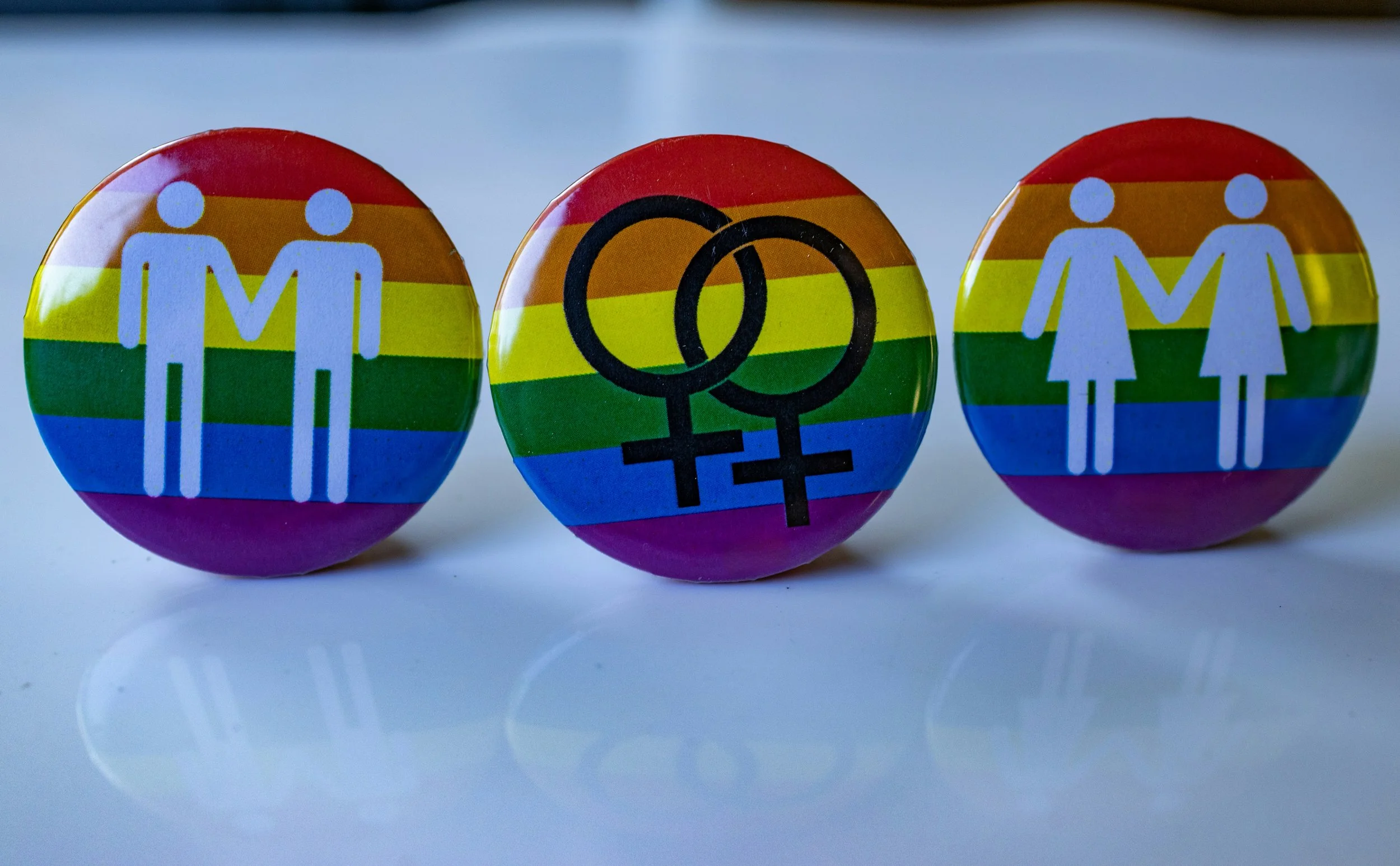
If you are coming out later in life, questioning your sexuality, or wondering if you might be queer in your 30s, 40s, 50s, or beyond, I want to start with this:
You are not behind.
You are not broken.
And no, you did not “miss it.”

When Easter Hurts: Understanding Religious Trauma and Finding Your Way Back to Yourself
Recently, while traveling, I passed a billboard that said, “Pick Jesus or the Easter Bunny. Not both.” I felt my stomach tense for a moment. Not because the message surprised me, but because of what it represents. It reflects the pressure many people grew up with, the expectation to choose the right path, the belief that joy or playfulness somehow competes with spirituality. It reminded me how often people were taught that there is only one acceptable way to exist, celebrate, or belong.
The Fawn Response After Relationship Trauma: When People Pleasing Becomes a Survival Strategy
Have you ever caught yourself saying yes when you really meant no? Maybe you notice yourself managing other people’s feelings, apologizing constantly, or avoiding conflict even when something really matters to you. Maybe you leave conversations feeling resentful, exhausted, or like you disappeared somewhere along the way. If this sounds familiar, you may be experiencing the fawn trauma response.

Is This a Sex Problem or a Relationship Problem?
As a sex therapist, this is one of the most common questions people bring into therapy. It usually comes with a lot of uncertainty and often a quiet fear about what the answer might mean. Is it me, or is it us?

When the Pinnacle Feels Out of Reach: What Bridgerton Gets Right About Orgasms
If you’ve watched Bridgerton, you might remember the careful way characters talk around sex. One phrase that stands out is the idea of reaching a “pinnacle.” It’s a euphemism, sure, but it’s also a surprisingly useful one. Because for many people, that pinnacle can feel distant, confusing, or completely unreachable.

Depression When the World Feels Like It’s on Fire (Part 2): When It Starts to Feel Personal
In Part 1 of this series, I wrote about depression that shows up when the world feels like it’s on fire. Not the kind of depression that comes from one specific loss, but the kind that settles in when stress, fear, and uncertainty never really let up. What I want to name more directly here is this: for many people, especially marginalized communities, the world feeling “on fire” is not a metaphor. It is personal. It is lived. It is happening to you and the people you love.

Why I Read Smutty Books (A Sex Therapist at Valid Love Explains)
Romance novels and sexually charged stories are often dismissed as silly, indulgent, or embarrassing. But from a sex therapy and mental health perspective, reading smut can be regulating, empowering, and deeply validating. It can also be a meaningful way to explore desire without pressure, performance, or shame.

What the New Year Really Means for Mental Health at Valid Love
At Valid Love, we notice something every January. People come in feeling conflicted.
The New Year is supposed to feel hopeful. Motivating. Clean.
But for many people, it feels heavy, emotional, or quietly overwhelming.
If that is you, we want to say this clearly. Nothing is wrong with you.
The Moral of the Story: A Blog About OCD
Morality is one of those things we’re all taught to consider as we grow up. Be good. Do the right thing. Treat people well. But for folks who live with Morality OCD (also called “moral scrupulosity”), that normal human desire to be a decent person can turn into a relentless internal surveillance system. Instead of guiding someone toward their values, it traps them in fear, self-criticism, and doubt about whether they’re “good enough” at all.

Trauma and Families During the Holidays: Finding Safety, Connection, and Space to Breathe
he holiday season can bring magic, comfort, and the soft glow of connection. At the same time, it can stir up memories, tension, and emotional overwhelm, especially for people who carry trauma histories. This time of year tends to magnify everything. The joy feels brighter. The pressure feels heavier. The old wounds feel closer to the surface. For many clients and families I work with, the phrase “family gathering” does not bring up images of laughter and warmth. Instead, it brings a sense of bracing for what might come next.

Codependency and ADHD: How They Connect and Why Therapy Helps You Break the Cycle
If you live with ADHD and feel like you are constantly managing other people’s emotions, you are not alone. Many people with ADHD find themselves stuck in codependent relationship patterns without realizing it. You might feel responsible for keeping the peace in your relationships. You might jump into caretaking or people pleasing when someone around you is stressed. You might give more than you get. These are common signs of codependency, and when ADHD is in the mix, these patterns can feel even stronger.