
Grieving from a Distance: When You Lose an Acquaintance
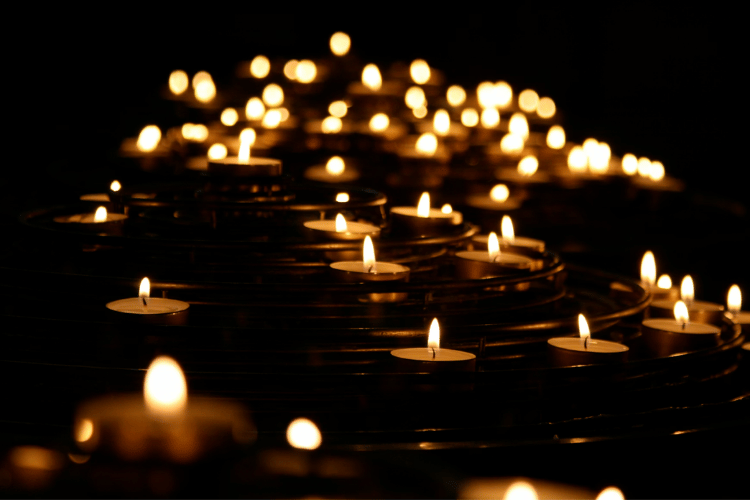
Photo by Mike Labrum on Unsplash
By Oliver Sweet, Digital Services Contractor
I logged onto the work chat to a message from my boss: a long-time supporter of the organization had recently passed. As I read the message, a strange weight sunk on me. We weren’t friends. Can you consider someone you shared a drink with once a year at a mutual friend’s party a friend? The networks of people we interact with every day are vast and complex, and loss can come suddenly and from many directions.
Sometimes, it’s news that you get in a text message from another friend. It may be something you see on social media. You may not learn about it until the next get together, when their absence can be felt in the room. At the worst moments, maybe you see the name in a news story about what happened.
Losing someone close to us is one of the most difficult experiences we can have. When we lose a distant relative, an acquaintance, a friend of a friend–that loss can often feel different, but it doesn’t mean you don’t feel the loss. Let’s take a moment to give some space for the sometimes confusing grief that comes with losing a distant acquaintance.
About Grief
Grief is not an emotion so much as it is a process. With grief can come many emotions that seem to happen at once and contradict each other: sadness over the loss, nostalgia over the memories shared, anger at the situation, relief if the loss came after a long illness, survivors guilt, and even anger at the person who is gone. If your relationship with the person was complicated or if their cause of death was sudden or tragic, grief can become even more complicated.
Grief is also not straight forward. As much as we would like for it to be simple, grief can come and go and surprise you. You may feel “better” or as if you have closure after attending the funeral or talking to your therapist, but months or even years later, something can happen that makes grief feel front and center again.
All of these factors can make the grieving process difficult, and the grief you feel for different people will be different. It’s okay if it doesn’t get easier.
“But we weren’t close”

Photo by Jessica Mangano on Unsplash
When you lose a distant relative or a casual acquaintance, grief is often compounded by a feeling of guilt that you shouldn’t be grieving. You may feel like this person is not yours to grieve, especially when you see their close friends and family share stories or feelings you can’t relate to. You may feel like you’re intruding or, at worst, feel as though you are stealing something from the people who “deserve” to grieve that person.
Often, that feeling isn’t just an internal sense of guilt. You may have other people in your life who are confused that you’re grieving someone you “didn’t even know”, or may struggle to understand why you’re struggling. Just like you never have to justify why you loved someone, you don’t have to justify your grief.
People’s lives are nuanced and multifaceted, as are their relationships. There is no such thing as being “close enough” to someone to grieve for them. Your grief can be informed by the interactions you had and the memories you shared, but it can also just as easily be informed by knowing they were loved by others and mourning the absence their death has created.
Grief Builds On Itself
Losing one person rarely means grieving only that one person. Often, a loss can lead to reflection on other people we’ve lost in the past, people we’ve almost lost, relationships that have lapsed, and even our own near death experiences and health scares. This compounding grief often means you’re not sure exactly who you’re grieving at any given moment, meaning those emotions can feel heavier and more significant.
All of that grief is real and it is all valid.
Grieving In Your Own Way
You deserve to give yourself space and honor your grief in a way that feels fitting. This may mean attending the funeral or memorial and giving your regards to the family. It may also mean reaching out to your shared connections and bringing everyone together for a more casual observation over dinner or drinks, whatever may be fitting for the person you’ve lost. Maybe you take this as an opportunity to reconnect with someone you haven’t talked to in a while, or maybe you’ll observe your grief privately in a way that feels appropriate.
However you choose to grieve, know that your response is valid. You never have to prove that you “deserve” to grieve, to yourself or anyone else.
If the complicated emotions feel like too much to handle on your own, you’re not alone. Connecting with a therapist, even if it’s only for one session to parse out how you’re feeling, is always an option and Valid Love is here to help. Email today to be connected with a professional who can help you decide the next steps.
Looking for more information on support with Valid Love? Learn more about our team of practitioners here.
Oliver Sweet (he/they) is a professional communicator, storyteller, and statistician with a background in psychology clinical management and intake. They are currently serving as Valid Love Therapy Collective’s Digital Contractor, providing web and social media support and content creation.